
Buy Guide
How to Choose the Right Atlas Copco Air Compressor for Your Application
Aug
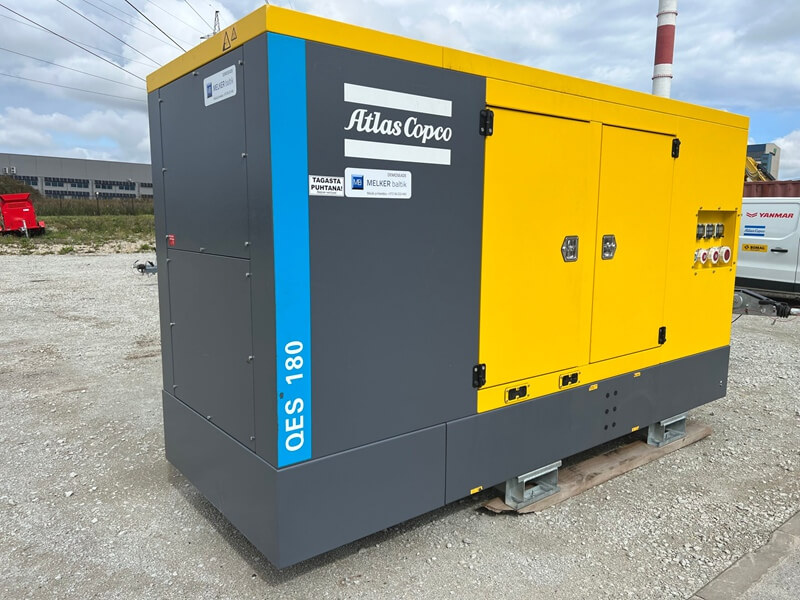
Choosing the right air compressor is an important decision for construction companies, industrial facilities, workshops, mining operations, and many other applications. The right compressor can improve productivity, reduce energy consumption, and provide reliable compressed air for years.
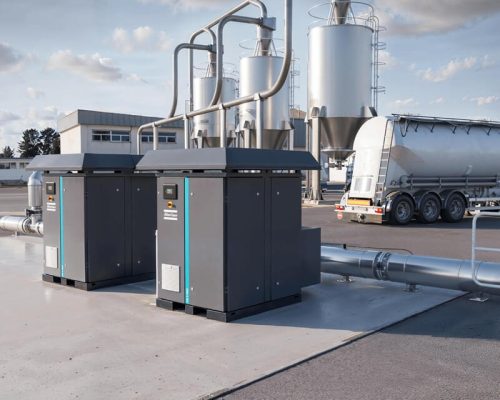
With a wide range of Atlas Copco air compressors available, selecting the right model requires more than simply choosing the largest or most powerful machine. You need to consider air demand, working pressure, application, power source, operating environment, portability, and maintenance requirements.
This guide explains the key factors you should consider when choosing an Atlas Copco air compressor for your application.
1. Determine Your Required Air Flow
The first step is to determine how much compressed air your equipment actually needs.
Air consumption is commonly measured in:
- CFM — Cubic Feet per Minute
- m³/min — Cubic Meters per Minute
- L/s — Liters per Second
Different tools and machines require different amounts of compressed air. For example, a small pneumatic tool may require relatively low airflow, while drilling equipment, sandblasting systems, and industrial machinery can require significantly higher airflow.
Before selecting a compressor, make a list of all pneumatic equipment that will operate simultaneously and calculate the total air demand.
It is also recommended to include an additional capacity margin to accommodate fluctuations in demand and future expansion.
2. Choose the Correct Working Pressure
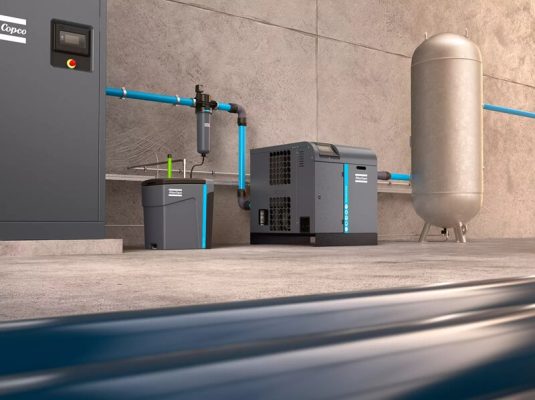
Airflow is only one part of compressor selection. You also need to determine the required working pressure.
Pressure is commonly measured in:
- bar
- PSI
For example, many pneumatic tools operate at relatively moderate pressures, while drilling, mining, and specialized industrial applications may require considerably higher pressure.
Selecting a compressor with insufficient pressure can cause equipment to operate inefficiently or fail to perform as expected.
At the same time, choosing a compressor with unnecessarily high pressure may increase operating costs.
The best approach is to select a compressor that matches the actual pressure requirements of your application.
3. Consider the Application
Different industries have different compressed-air requirements.
Construction
Construction sites often require portable compressed air for:
- Rock drills
- Breakers
- Air hammers
- Sandblasting
- Concrete applications
- Road construction equipment
For these applications, a portable diesel-powered compressor can be a practical solution because it can operate in locations where grid electricity is unavailable.
Mining
Mining applications can require reliable compressed air under demanding operating conditions.
Compressors may be used for:
- Drilling
- Exploration
- Rock excavation
- Dust control
- Pneumatic equipment
For mining projects, durability, high airflow, pressure capability, and serviceability are particularly important.
Manufacturing
Industrial manufacturing facilities often require a stable supply of compressed air for:
- Pneumatic production equipment
- Assembly systems
- Automation
- Instrumentation
- Material handling
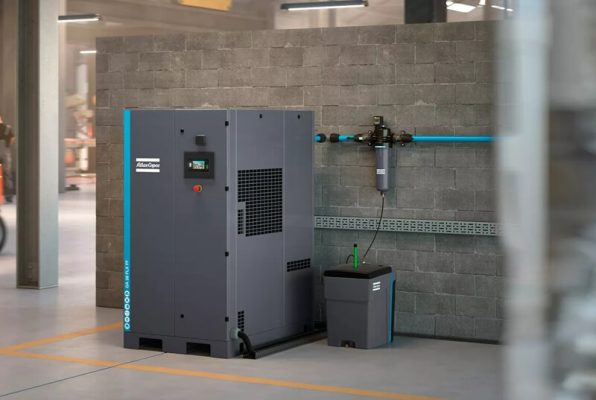
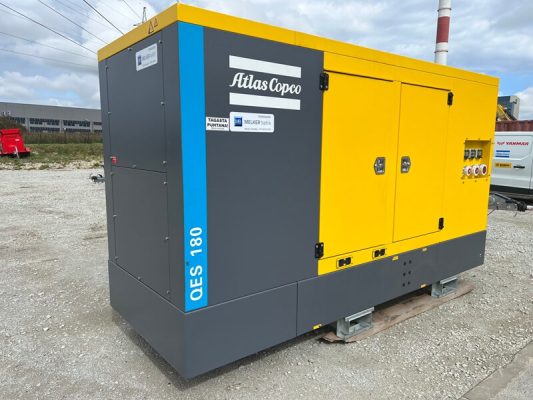
For fixed industrial installations, an electric compressor may be preferable because it can provide reliable compressed air while minimizing local emissions and reducing fuel requirements.
Workshops and Service Applications
Automotive workshops, maintenance facilities, and small production operations may require compressed air for:
- Impact wrenches
- Air tools
- Tire inflation
- Cleaning
- Painting
- General maintenance
In these applications, a compact compressor with the appropriate airflow and pressure may be more economical than a large industrial machine.

4. Portable or Stationary Compressor?
Another important decision is whether you need a portable or stationary compressor.
Portable Air Compressors
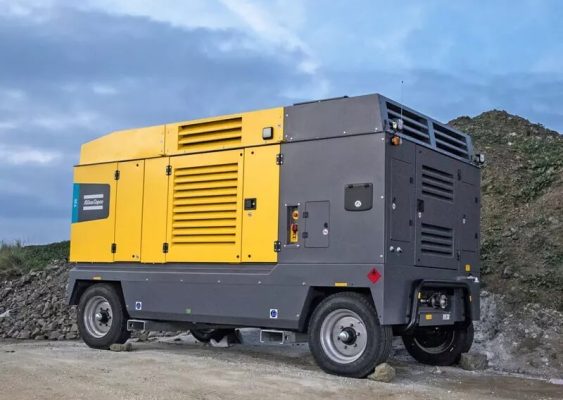
Portable compressors are designed for applications where equipment needs to be moved between different locations.
They are commonly used in:
- Construction
- Mining
- Quarrying
- Road maintenance
- Rental fleets
- Remote projects
Key advantages include mobility, flexibility, and the ability to provide compressed air at temporary job sites.
Stationary Air Compressors
Stationary compressors are generally installed permanently at a facility.
They are suitable for:
- Manufacturing plants
- Workshops
- Factories
- Industrial facilities
- Production lines
If compressed air is required continuously at a fixed location, a stationary compressor system may be the better choice.
5. Diesel or Electric Power?
The available power source is another major consideration.
Diesel Air Compressors
Diesel-powered portable compressors are useful when operating in remote areas or construction sites without reliable electrical power.
Advantages can include:
- High mobility
- Independent operation
- Suitable for remote locations
- Convenient for outdoor construction
- Flexible deployment
Electric Air Compressors
Electric compressors are generally suitable for locations with a stable electrical supply.
They can be particularly attractive for fixed industrial applications where compressed air is required for long operating periods.
When comparing diesel and electric compressors, consider not only the purchase price but also fuel or electricity costs, operating hours, maintenance requirements, emissions regulations, and the availability of power at the job site.
6. Consider the Operating Environment
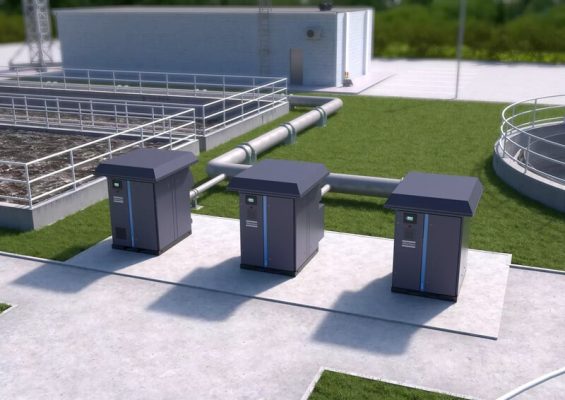
The environment in which the compressor operates can significantly affect equipment selection.
Important factors include:
- Ambient temperature
- Altitude
- Dust levels
- Humidity
- Operating hours
- Indoor or outdoor installation
- Available space
- Transportation requirements
Construction and mining environments can expose equipment to dust, vibration, high temperatures, and heavy workloads.
In these conditions, compressor durability and appropriate filtration and cooling systems become particularly important.
If the compressor will operate at high altitude or in extreme temperatures, make sure the selected model is suitable for those conditions.
7. Oil-Free or Oil-Injected Compressor?
The required air quality should also be considered.
For many general industrial applications, oil-injected compressors can provide an effective and economical compressed-air solution.
However, certain industries require extremely clean compressed air.
These can include:
- Food and beverage
- Pharmaceutical manufacturing
- Electronics
- Medical applications
- Certain chemical processes
Where contamination from oil cannot be tolerated, an oil-free compressor may be more appropriate.
The correct choice should be based on the air-quality requirements of the application rather than simply the compressor’s initial purchase price.
8. Think About Energy Efficiency
Energy consumption can represent a significant portion of the total cost of owning and operating an air compressor.
When evaluating different compressor options, consider:
- Compressor efficiency
- Operating pressure
- Actual air demand
- Operating hours
- Load/unload cycles
- Variable-speed drive technology where applicable
- Leakage in the compressed-air system
A compressor that has a slightly higher purchase price may provide a lower total cost of ownership if it uses less energy over its operating life.
For industrial facilities with long operating hours, energy efficiency should therefore be one of the main selection criteria.
9. Maintenance and Spare Parts Availability
A compressor is an important piece of equipment, so maintenance should be considered before purchasing.
Check the availability of:
- Filters
- Air/oil separators
- Lubricants
- Belts
- Service kits
- Engine components
- Compressor components
- Genuine spare parts
Reliable access to spare parts can reduce downtime and help maintain equipment performance.
It is also important to follow the manufacturer’s recommended maintenance intervals and use suitable replacement parts and consumables.
10. Calculate the Total Cost of Ownership
The cheapest compressor is not necessarily the most economical compressor.
When comparing different options, consider the total cost of ownership, including:
Purchase Price + Energy/Fuel Costs + Maintenance + Spare Parts + Downtime + Transportation
A reliable compressor with efficient operation and good service support can provide better long-term value than a lower-cost machine with higher operating expenses.
11. A Simple Air Compressor Selection Checklist
Before purchasing an Atlas Copco air compressor, answer these questions:
- What is my required airflow?
- What working pressure do I need?
- Which pneumatic tools or machines will the compressor power?
- How many tools will operate simultaneously?
- Do I need a portable or stationary compressor?
- Is diesel or electric power more suitable?
- What are the environmental conditions?
- Do I require oil-free compressed air?
- How many hours per day will the compressor operate?
- What maintenance and spare parts support is available?
Once these requirements are clear, it becomes much easier to identify the appropriate compressor configuration.
Conclusion
Choosing the right Atlas Copco air compressor is ultimately about matching the equipment to the real requirements of your application.
The most important factors include airflow, working pressure, application, power source, portability, air quality, operating environment, energy efficiency, and maintenance requirements.
Instead of choosing a compressor based solely on horsepower or purchase price, evaluate the complete operating requirements and long-term cost of ownership.
If you are unsure which compressor configuration is suitable for your project, providing your required airflow (CFM or m³/min), working pressure (bar or PSI), application, operating hours, and power availability can help narrow down the most appropriate solution.
Need Help Choosing an Air Compressor?
Our team can help you identify the right compressed-air solution based on your application, required pressure, airflow, and operating environment.
Contact us today to discuss your air compressor requirements and find the right solution for your project.
